




Influencer marketing has two costs: what creators charge to post, and what it costs to run the program. Creator fees range from about $25 a post for a nano influencer to $25,000 and up for a mega creator.
On top of that sits the cost of managing the work, whether that is a freelancer, an agency, an in-house hire, or a full-time offshore specialist. Brands that do not separate the two almost always overpay.
Getting this right matters. The influencer marketing industry reached an estimated $32.55 billion in 2025, nearly twice the $16.4 billion estimated for 2022 (Influencer Marketing Hub). And spending is still climbing: 87 percent of marketers plan to increase their influencer budgets in 2026, according to Influencer Marketing Hub's 2026 benchmark report.
This guide breaks down both layers. First, what creators actually charge by tier and platform, plus the line items most budgets miss. Then, the four ways to manage a program and what each costs, including a ready-to-use influencer marketing manager job description you can lift for your next hire.
It is written for founders, marketing leads, and ops people building an influencer budget from scratch. For how to plan and run the campaigns themselves, see our guide to influencer marketing campaigns that drive real results.
Influencer marketing cost in brief:
- Creator cost per static post by follower tier:
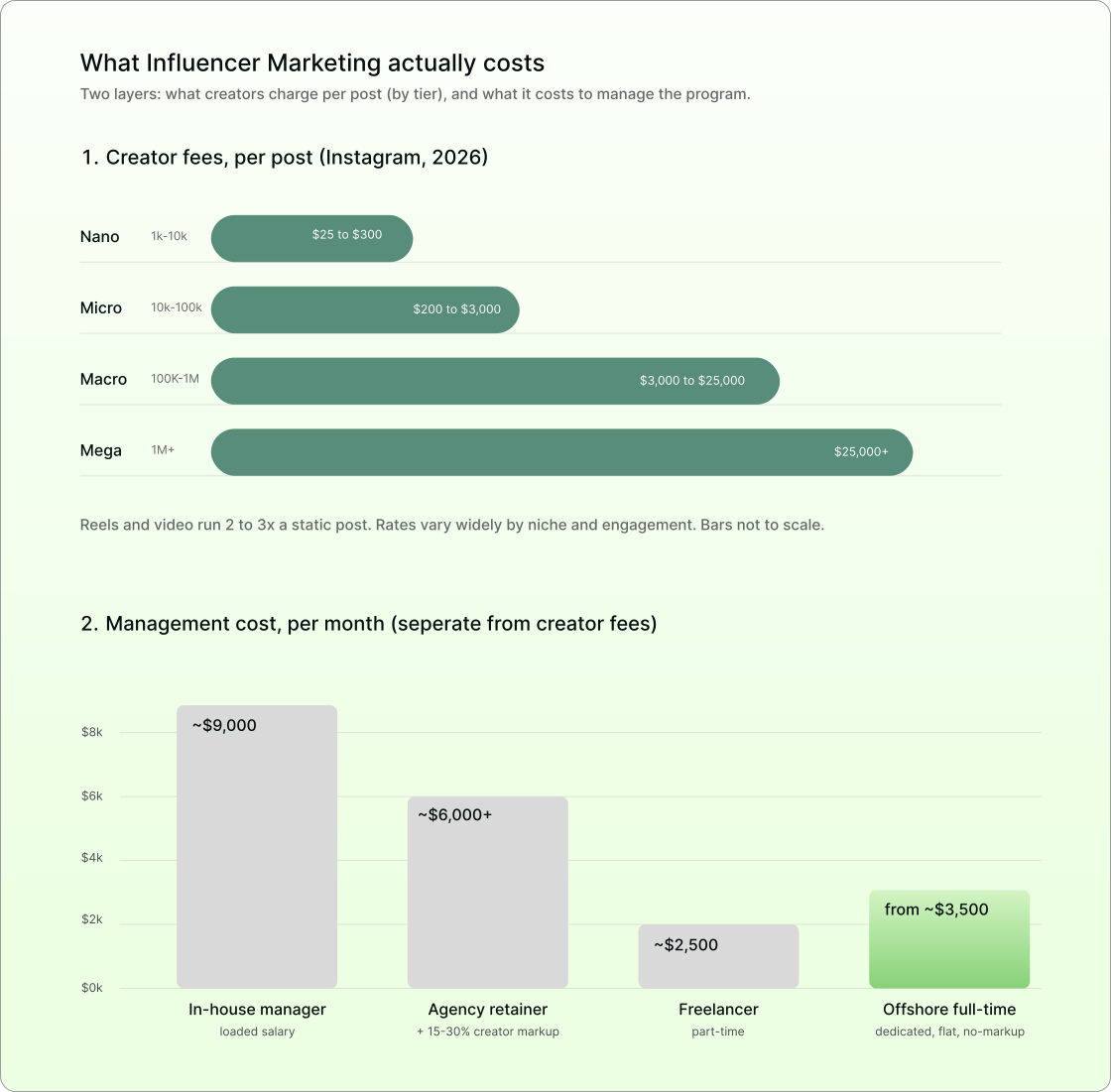
- Nano (1K to 10K followers): $25 to $300
- Micro (10K to 100K): $200 to $3,000
- Macro (100K to 1M): $3,000 to $25,000
- Mega (1M+): $25,000+
- Reels and video typically cost 2 to 3 times a static post, and rates swing widely by niche and engagement.
- Most deals are priced per asset (per post), but performance models exist too: cost per engagement, cost per thousand impressions, and affiliate commission, often blended into a hybrid.
- Typical influencer CPMs run about $7 to $25 on TikTok, $15 to $50 on Instagram, and $15 to $75+ on YouTube.
- Usage rights and whitelisting are extra, often 25 to 50 percent on top of the creator fee. Tools run from about $199 a month for discovery to $2,500+ for an all-in-one platform.
- On average, brands earn $5.78 for every $1 spent on influencer marketing (Influencer Marketing Hub), which is what makes the channel worth the spend.
- Management is a separate cost: freelancers run $500 to $3,000 a month, agencies $3,000 to $25,000 a month plus a 15 to 30 percent markup on creator fees.
- A US in-house influencer marketing manager averages $83,000 and up, landing near $9,000 a month fully loaded.
- Full-time offshore talent to run the program starts at $3,500 a month, flat, with no markup on creator fees.
- Micro and nano creators usually deliver the best engagement and ROI per dollar, which is why most brands run many small deals instead of one big one.
The rest of this guide unpacks each of these.
First, Separate Creator Fees From Management Cost
Influencer marketing has two costs that often get lumped together. Keeping them apart is the single most useful thing you can do when building a budget.
The two layers, defined: Creator fees are what you pay the influencers themselves to create and post. Management cost is what you pay a person or team to find creators, negotiate, brief, review content, and report.
This guide covers both, in that order. They are separate line items, and a good program tracks them separately.
The trap is the agency markup. Many agencies charge a monthly retainer and take 15 to 30 percent on top of every creator fee they manage. So a $5,000 creator deal can quietly cost you $6,000 to $6,500 once the markup is applied.
Knowing which layer a quoted price refers to is how you avoid paying a percentage premium on money that goes straight to the creator.
Creator Fees by Tier
The biggest variable in any influencer budget is which tier of creator you work with. Rates scale with audience size, but engagement usually moves the opposite way. That is why the smallest tiers often deliver the best value.
The rates above are for a single static feed post. The reel and video column applies the typical 2 to 3 times multiplier, since those formats take more production and tend to reach beyond a creator's own followers.
A few things shift these numbers:
- Format: Reels, TikToks, and YouTube integrations typically cost 2 to 3 times a static feed post, and YouTube runs the highest of any platform because of production effort.
- Niche: a finance or tech creator commonly charges several times what a lifestyle creator with the same following does.
- Engagement: creators whose sponsored posts (not just their organic ones) hold a genuinely high engagement rate often command a 30 to 50 percent premium, and they are usually worth it.
The benchmark to ask for is engagement on a creator's paid collaborations. That is what predicts how your campaign will perform, not the inflated numbers on their personal posts.
The strategic takeaway most brands miss: bigger is not better per dollar. On Instagram, nano creators average about 3.8 percent engagement versus 1.6 percent for macro accounts, roughly 2.4 times as much, according to Dash Social's 2026 influencer benchmarks. The brands seeing the best returns tend to run 10 to 20 micro-creator campaigns rather than one or two macro deals.
It spreads risk and buys more authentic reach for the same spend. It also helps explain the headline ROI number for the channel: brands earn an average of $5.78 for every $1 spent.
Do you always pay per post, or can you pay for performance?
Most deals are priced per asset: a flat fee for a defined deliverable like one Reel or one TikTok, agreed upfront regardless of how it performs. But per-post is not the only option, and performance-based models are growing fast:
- Cost per engagement (CPE): you pay per like, comment, or share, often around $1 to $5 each. Good when the goal is engagement and you want cost tied to it.
- Cost per thousand impressions (CPM): you pay per 1,000 views, common on YouTube and for reach-focused campaigns. Rewards creators with large, real audiences. (Benchmarks by platform are below.)
- Affiliate or commission: the creator earns a percentage of sales they drive, commonly 10 to 15 percent. Low risk for the brand since you only pay on results, though established creators often will not work commission-only. (Our affiliate marketing guide covers how commission programs work.)
- Hybrid: the most common structure for ongoing programs, a smaller flat fee plus a bonus or commission tied to performance. It covers the creator's production cost and still rewards results.
The right model depends on your goal. Flat per-post fees give you cost certainty and suit awareness pushes. Performance models suit trackable, sales-driven campaigns.
Many brands start flat to test a creator, then move proven performers to a hybrid deal.
The Costs Most Influencer Budgets Miss
Creator fees and management are the two big lines. Three smaller ones decide whether the budget actually holds: what you pay per view, what you pay to reuse the content, and what you pay for software.
Cost per thousand views (CPM) by platform
CPM is the fairest way to compare creator quotes across platforms, because it normalizes for audience size. Modash's benchmarks for US and UK campaigns put typical influencer CPMs at:
- Instagram Stories: $20 to $50
- Instagram Reels: $15 to $45
- TikTok videos: $7 to $25
- YouTube integrations: $15 to $35
- YouTube dedicated videos: $50 to $75+
To calculate it, divide the creator's fee by the views the post earned, then multiply by 1,000. A $1,000 TikTok that reaches 100,000 views works out to a $10 CPM. Estimate CPM before you sign from a creator's average views, then replace it with real numbers once the post is live.
Usage rights and whitelisting
A creator's fee usually covers the post on their own channel and nothing more. Running that content as a paid ad from your brand account (usage rights) or from the creator's handle (whitelisting, which includes Spark Ads on TikTok and Partnership Ads on Meta) is a separate line item.
Influencer Marketing Hub puts the standard whitelisting fee at about 25 percent of the creator's base rate for every 30 days of boosting. Later's 2026 pricing benchmarks show whitelisting adding 30 to 50 percent to the base rate, and suggest reserving 20 to 30 percent of the total influencer budget for usage rights and paid amplification.
Negotiate rights in the first contract, not after a post takes off. Asking for them later almost always costs more, and the best-performing creator content is usually worth more as an ad than as an organic post.
Influencer platforms and tools
Discovery-only tools such as Modash start around $199 a month. All-in-one platforms that add CRM, contracts, payments, and reporting, such as GRIN and Aspire, typically run $2,000 to $2,500 a month or more on annual contracts, per Hypefy's 2026 tool roundup.
Most programs running fewer than 10 creators a month do not need an enterprise platform. A discovery tool plus a well-kept tracker covers it, and the money is better spent on creators or on the person running the program.
The Four Ways to Manage an Influencer Program, and What Each One Costs
Once you know roughly what creators cost, the next question is who runs the program. There are four common models. They price differently because they sell different things: hours, deliverables, an employee, or a dedicated person.
A quick way to read the table: program size is the fastest filter. A few deals here and there points to a freelancer. A high-volume, hands-off program points to an agency.
The busy middle, the 5 to 20 creators a month where most growing brands actually live, is where a dedicated person (offshore or in-house) does the job better and cheaper than either.
The sticker prices are not apples to apples. An agency markup on creator fees is the line that surprises people most, since it is a percentage on money that goes to the creator, not to the work. A salary is just the starting point of what an employee costs.
The next sections break each one down.
Freelance Influencer Marketing Rates
Freelancers are the most flexible and usually the cheapest entry point. You can hire someone to source creators, manage outreach, or run a single campaign, and scale up or down month to month.
Most charge a flat retainer of $500 to $3,000 a month depending on how many creators they manage, or a project fee for a defined campaign. The better ones do not mark up creator fees, so you pay the creator directly and the freelancer just for their time.
The catch is structural, not personal. A freelancer is splitting attention across several clients, so creator relationships, the heart of a good program, get only part of their focus.
Influencer outreach, negotiation, and content review are time-consuming and ongoing. A freelancer juggling several brands cannot always keep your pipeline warm, and when they go quiet, your program stalls.
Freelancers are a strong fit when you run a few deals at a time, have a clear brief, and are comfortable directing the work.
- Where it works: flexible, fast to start, low commitment, usually no creator markup
- Watch out for: divided attention, a program that stalls when they are busy, no backup
- Pricing: $500 to $3,000 a month on retainer, or a per-campaign project fee
Influencer Marketing Agency Pricing
An agency sells you a full team and a process: creator sourcing, outreach, contracts, content review, and reporting, all handled for you.
Agencies price in two stacked lines:
- A monthly retainer, commonly $3,000 to $25,000 depending on program size. A $5,000 retainer might cover 3 to 5 mid-tier creators a month; a $15,000 one, a 10 to 20 creator program.
- A markup on creator fees, usually 15 to 30 percent, with the lower end reserved for large-spend accounts.
Some use project fees of $5,000 to $50,000 per campaign instead. All in, agency overhead commonly lands 30 to 45 percent above what the same creators would cost booked directly.
The markup is the thing to scrutinize. A retainer pays for the work, which is fair. A 20 percent markup on a $10,000 creator deal is $2,000 for processing a payment that was going to the creator anyway.
The math works once you run enough volume, generally 15 or more creator deals a month, that the time saved on procurement outweighs the premium. Below that, you are paying agency overhead to do what one focused person could.
Agencies make sense when you run a high volume of deals, want zero operational lift, and your budget absorbs the markup.
- Where it works: full service, deep creator networks, zero operational lift, strong at high volume
- Watch out for: the markup on creator fees, high retainers, minimums, shared attention
- Pricing: $3,000 to $25,000 a month retainer, plus 15 to 30 percent markup on creator fees
In-House Influencer Marketing Manager Salary, Fully Loaded
Hiring in-house gets you the thing the other models cannot: one person, full-time, who owns your creator relationships and your brand voice. The cost question here is the one most teams get wrong, because they budget the salary and forget the rest.
Worth noting before you commit: a manager-level hire is more than many programs need day to day. If you mainly need execution, an in-house lead plus a specialist often costs less and covers more (more on that below).
The base salary runs higher than most marketing specialist roles because this is a manager title. An influencer marketing manager averages about $83,000 in 2026 per ZipRecruiter.
Glassdoor puts the typical range higher, from roughly $90,000 to $166,000 depending on seniority and industry. Call it $80,000 to $100,000 for a capable mid-level hire, more in major markets or at large consumer brands.
Then you load it. A widely used HR benchmark is that a full-time employee costs 1.25 to 1.4 times base salary once you add payroll taxes, benefits, and overhead.
US Bureau of Labor Statistics data backs the upper end of that range: for private industry workers in June 2026, benefits made up 30 percent of total compensation, with wages the other 70 (BLS). That alone puts total compensation at roughly 1.4 times wages.
So an $85,000 salary realistically costs $106,000 to $119,000 a year fully loaded, roughly $8,800 to $9,900 a month. Discovery and management tools run another $200 to $2,500 a month on top, depending on the platform.
That is the honest comparison number. Not the $85,000 salary, but the $9,000-ish a month it actually takes to keep a US influencer manager seated.
In return you get an owner: someone who builds long-term creator relationships and carries your brand. The tradeoff is that you also own recruiting, management, retention, and the cost of backfilling when they leave and take those creator relationships with them.
In-house is the right call when influencer is central to the business and the budget covers a loaded US manager salary. It also assumes you can keep a good hire happy enough to stay.
- Where it works: full ownership of creator relationships, deep brand knowledge, fully your employee
- Watch out for: the loaded cost is well above the salary line, plus tools, recruiting, and turnover costs
- Pricing: about $9,000 a month fully loaded for a mid-level US hire, tools on top
Full-Time Offshore Influencer Marketing Specialist
Here is the punchline: a great, experienced influencer specialist, working full-time (40 hours a week) on your account alone, for around 60 percent less than a US hire. That is the offshore model.
Starting at $3,500 a month, you get a dedicated person who only works on your program. There is no markup on creator fees the way an agency charges, and no $9,000-a-month loaded US salary.
The reason the math works is the local labor market, not a discount on the quality. A skilled influencer specialist in the Philippines earns a strong local wage at a number well below the US equivalent, because the cost of living is lower.
And the work fits the model well. The day-to-day of an influencer program (sourcing, outreach, briefing, content collection, tracking deliverables and promo codes, and reporting) is exactly the kind of high-volume execution a dedicated specialist does best. A freelancer splitting attention or an agency rotating accounts struggles to keep up.
You bring the brand and the strategy. They run the program.
The one catch is that quality depends entirely on vetting, which is where a specialized partner matters far more than a generic job board. That is the part worth understanding next.
Why GrowthAssistant is built for this exact role
GrowthAssistant exists because of one pairing. Co-founder Jesse Pujji built Ampush, one of the world's leading performance marketing agencies, which was acquired by Tinuiti in 2023. There he ran a large offshore team and learned firsthand what great marketing talent looks like.
Co-founder Adriane Schwager spent years leading recruiting for a major hedge fund, screening tens of thousands of applicants. Lifelong friends, they combined his eye for marketing talent with her hiring engine.
Influencer programs are relationship-heavy and high-volume: sourcing, outreach, briefing, and tracking many creators at once. That mix of marketing know-how and rigorous vetting is exactly what it takes to place someone who can run the program well.
That is also why the quality bar is the whole product. Roughly 1 in 400 applicants makes it through. Every specialist is AI-certified before day one with ongoing training, works your hours full-time, and is backed by a dedicated success manager.
And it is guaranteed: the 100% Match Guarantee covers a free replacement, with no time limit, if a hire is ever not the right fit.
This is not theoretical for influencer and affiliate programs specifically. GrowthAssistant has built and staffed the influencer and creator teams behind brands like HubSpot, Aspire, Acceleration Partners, Hungryroot, and Seed, with many of those placements running multiple years.
- Where it works: full-time focus, dedicated to you, flat fee, no markup on creator fees, around 60 percent less than a US hire
- Watch out for: quality depends entirely on vetting, so the partner matters; you provide the strategy and brand direction
- Pricing: starting at $3,500 a month for a dedicated, full-time specialist, creator fees separate
Influencer Marketing Manager Job Description: The Specialist Version Most Teams Need (Free Template)
Most teams do not need a manager to run the day to day. They need a specialist or assistant who executes (sourcing, outreach, briefing, tracking, and reporting) while an in-house lead sets the strategy.
Here is a job description for that execution-level role, drawn from how influencer roles are actually staffed across real programs. Lift it and adjust.
Role summary
The Influencer Marketing Specialist runs the day-to-day execution of a brand's creator program: finding and vetting creators, managing outreach and onboarding, coordinating briefs and content, and tracking results.
This is a hands-on coordination role that turns an existing strategy into live, on-brand campaigns. It reports to a marketing lead or in-house owner who sets direction.
Responsibilities
- Source and vet creators across Instagram, TikTok, and YouTube against brief criteria
- Run outreach, follow-ups, and onboarding, and keep the creator pipeline warm
- Coordinate contracts, deliverable schedules, and payment logistics
- Send briefs, collect and route content for approval, and confirm it is on-brand and FTC-compliant
- Track each creator's deliverables, post dates, links, and promo codes
- Pull campaign performance: reach, engagement, clicks, conversions, and ROI by creator
- Maintain the creator database, the campaign calendar, and the content/usage-rights tracker
- Support affiliate and product-seeding programs and flag which creators to re-book
Required skills
- Experience supporting or running creator or influencer campaigns
- Strong organization, follow-through, and written communication for outreach
- Comfort with influencer platforms, spreadsheets, and tracking tools
- Sharp attention to detail across many deals at once
- Working understanding of FTC disclosure rules and brand-safety basics
Nice to have
- Experience with affiliate, UGC, or product-seeding programs
- Light content or design ability
- Familiarity with your specific niche or vertical
This is an execution role, so prioritize organization and reliability over strategic seniority. Pair it with an in-house lead who owns the brand and the strategy.
So What Should You Actually Budget?
Budget in two layers. First the creator fees for the tier and volume you want, then the management cost to run it. Keep them separate, and leave room for usage rights and tools.
- Testing the channel (1 to 4 creators/mo, under ~$2K creator spend): work with nano and micro creators directly ($25 to $3,000 a post), managed by a freelancer at $500 to $2,000 a month, or seed product for free.
- A steady program (5 to 20 creators/mo, ~$2K to $15K creator spend): a dedicated specialist, offshore starting at $3,500 a month or in-house, almost always beats a stretched freelancer or an agency markup at this volume.
- The hybrid most teams land on: an in-house lead or founder owning the strategy and creator relationships, with a dedicated specialist (offshore, starting at $3,500 a month) running the day-to-day sourcing, outreach, briefing, and tracking. You keep the relationships and direction, and hand off the high-volume coordination, usually for far less than a loaded US manager salary.
- High volume, hands-off (15+ creators/mo, ~$15K+ creator spend): an agency at $3,000 to $25,000 a month plus the creator markup, if you can absorb it.
- Influencer is core and you want a US owner: budget about $9,000 a month all-in for an in-house manager, plus tools and creator fees.
- On top of any model: set aside 20 to 30 percent of the creator budget for usage rights and paid amplification if you plan to run creator content as ads.
Quick guide: which model fits
- Just testing, tiny budget: freelancer or product seeding. You direct it, creators get paid directly.
- High volume, want zero lift: agency. You pay the retainer and the markup for full service.
- Influencer is mission-critical and budget is there: in-house manager. You own the relationships and the loaded cost.
- Best balance of dedicated focus and cost, no markup: full-time offshore specialist running the program day to day.
One rule worth keeping: the more creator deals you run, the more the agency markup costs you, because it is a percentage of a growing number.
At high volume, a dedicated person on a flat fee who books creators directly almost always beats paying a percentage on every deal.
Where GrowthAssistant Fits
If the offshore route is the one that fits, here is what working with an offshore influencer marketing specialist from GrowthAssistant looks like day to day:
- Source and vet creators
- Run outreach and onboarding
- Coordinate briefs and contracts
- Collect and route content for approval
- Track every deliverable, link, promo code, and result
That frees your in-house lead to focus on strategy instead of coordination. The fee is flat, and you book creators directly, so there is no percentage markup skimmed off every deal.
One practical example of what that execution covers: for our client Legacybox, the specialist did not just book posts. They negotiated the usage rights to own the creator's content and to sponsor (boost) the post as a paid ad.
That meant sponsorship rights for the first month, plus an option to extend if it resonated with customers. That kind of rights-and-whitelisting negotiation is exactly the detail a dedicated specialist manages and a rushed freelancer often misses, and it can be worth more than the post itself.
Your specialist works full-time, 40 hours a week on your hours, for one client: you. You can swap roles within your subscription as your needs change, and the 100% Match Guarantee covers a free replacement at any time if the fit is not right.
You bring the strategy and the creator relationships. Your Growth Assistant brings the execution.
Starting at $3,500/month for an influencer specialist. Month to month. No placement fee.


.svg)

